
Bodies and Pregnancy
The Lost DaughterLeda’s reflections on pregnancy, childbirth, and the doll’s hidden worm expose her struggle to reconcile intellectual control with unruly living matter.
increasing Bearing strength in each event
 decreasing
Bearing strength in each eventdecreasingA Controlled First Pregnancy
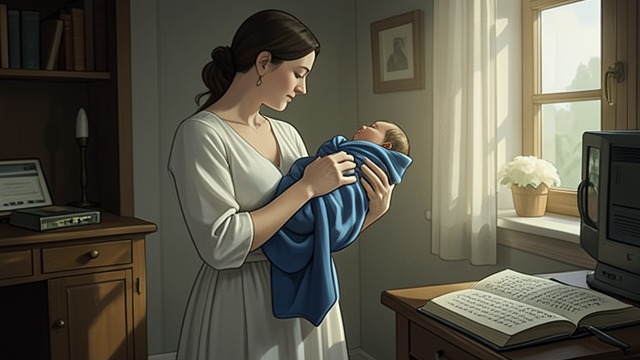
A Controlled First Pregnancy
A planned experience
Leda approaches her first pregnancy with vigilance, reading and translating for the child in her womb. She wants to remain elegant, active, and in command of the physical process.
Birth as triumph
Bianca’s arrival becomes, for a brief time, the most intense pleasure of Leda’s life. This memory establishes an ideal of maternal experience that she later finds impossible to reproduce.
Marta as Living Matter
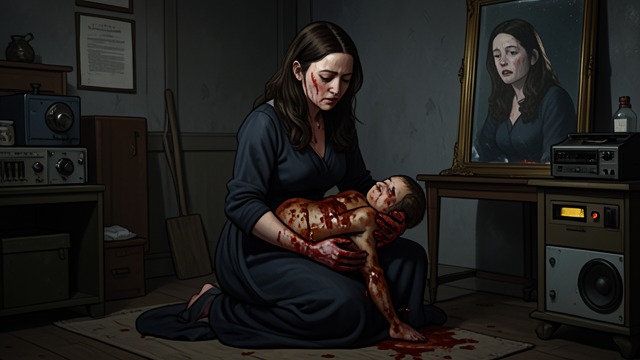
Marta as Living Matter
Control gives way
Leda experiences her pregnancy with Marta as an invasion that resists intellectual and imaginative transformation. She describes the fetus through images of iron, blood, and damaged matter.
The ideal collapses
This experience destroys the celebratory account she had built around her first pregnancy. Leda’s distress is not a rejection of Marta as a person, but a record of her struggle with the body’s autonomy.
The Doll’s Dark Fluid
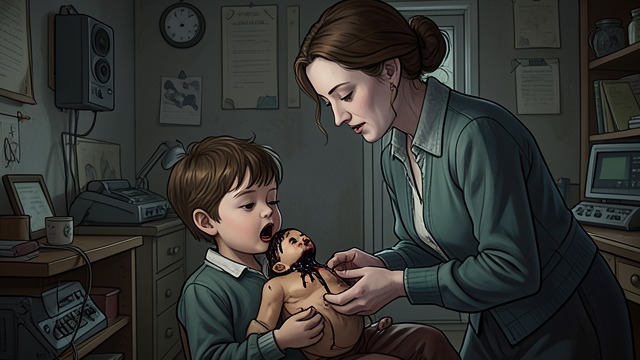
The Doll’s Dark Fluid
A toy becomes bodily
Leda discovers dark liquid leaking from Nani’s mouth and imagines the stagnant water inside its body. She is repelled but remains unable to give the toy back.
The hidden interior
The doll’s cavity evokes pregnancy as a concealed process that contains matter neither clean nor ideal. The object makes Leda’s abstract memories of bodily alienation immediate and tactile.
A Worm in the Belly
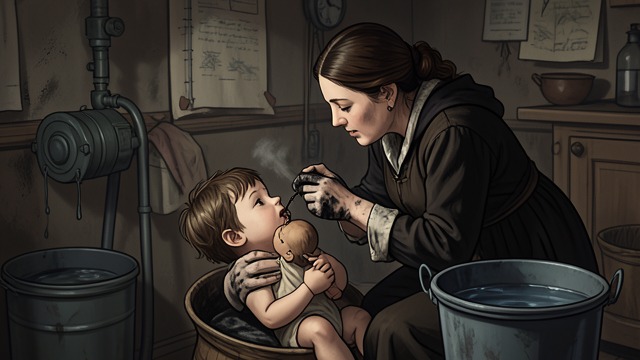
A Worm in the Belly
The contents are revealed
Leda washes the doll and carefully removes a sandworm from its mouth. Elena had placed the worm inside as part of a game in which the doll was pregnant like Rosaria.
Revulsion becomes pity
Although Leda fears crawling creatures, she feels pity for the worm. The moment joins childhood memory, pregnancy, and play without turning any of them into a clean or reassuring symbol.
Maternal Play Reconsidered
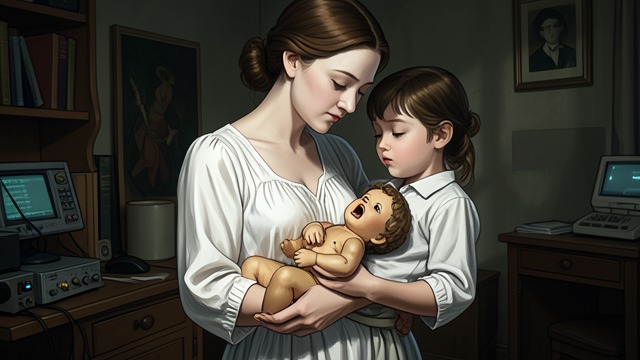
Maternal Play Reconsidered
Playing the mother
Leda dresses and tends Nani, repeating gestures she has watched Elena perform. She recognizes that care can be imitated, desired, and resisted at once.
A less perfect image
The doll does not restore an ideal of motherhood; its water, worm, and damaged body unsettle it. Leda’s experience suggests that maternal attachment is made through ordinary play as well as through pain and ambivalence.
Before Bianca’s birth
During Leda’s second pregnancy
The night Leda keeps Nani
After Nina reclaims the doll
Near the end of the vacation
